What a 55+ Community Actually Is
An age-qualified community, often marketed as 55+ or active-adult, is a housing category designed for buyers who are typically 55 and older. In the Charleston area these communities are concentrated to the northwest of the city, in the Summerville, Nexton, and Cane Bay corridors, where land and new construction are more available. The homes are usually single-level or primary-suite-on-main designs built for easy, low-maintenance living.
The defining feature is the amenity package and the lifestyle it supports. Most of these communities are built around a clubhouse and an on-site activities director, with a calendar of clubs, classes, and social events. That structure is a big part of the appeal: it makes it easy to stay active and meet neighbors without leaving the community.
Typical Amenities and What's Included
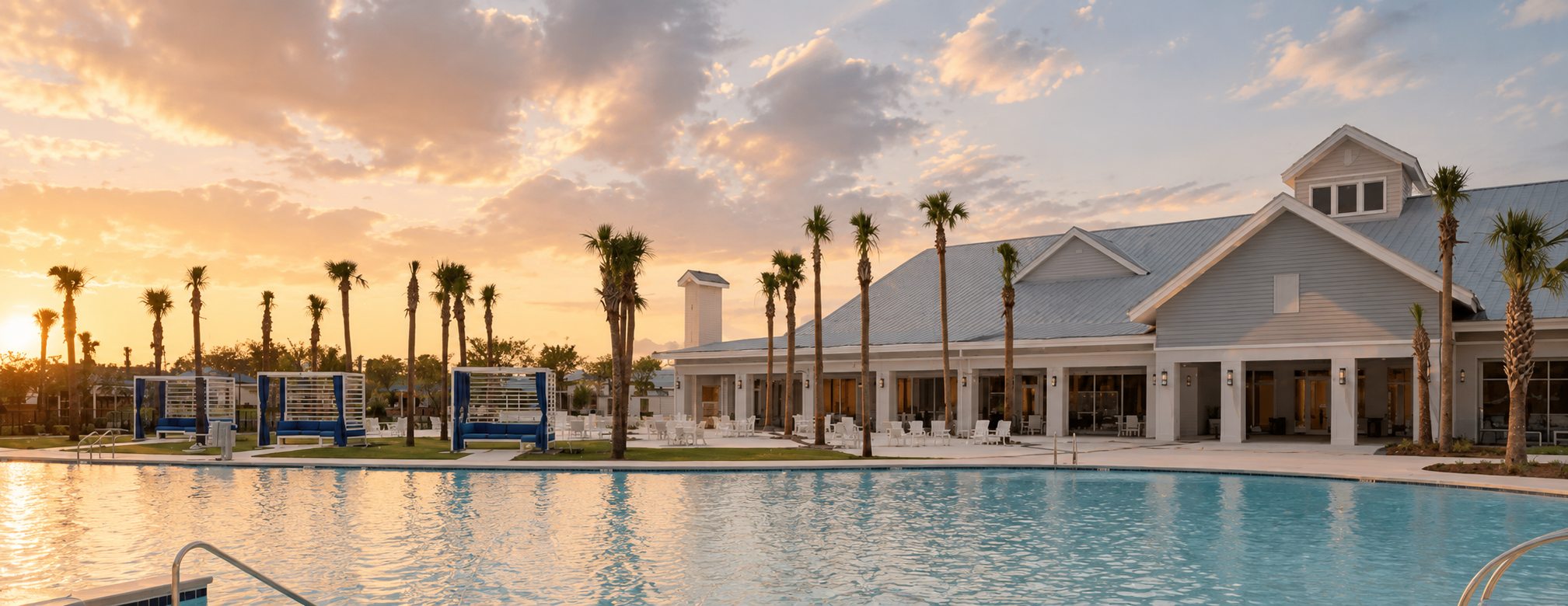
While every community is different, the amenity lists tend to rhyme. Expect a clubhouse with gathering and event spaces, indoor and/or outdoor pools, a fitness center, and courts for pickleball, tennis, and sometimes bocce. Walking and biking trails, ponds, community gardens, and dog parks are common, and some communities include or sit near golf.
Just as important is what the HOA covers. In many age-qualified communities, lawn care and some exterior maintenance are included in the dues, which is a major draw for buyers who want to travel or simply spend less time on upkeep. Because the dues and exactly what they include vary from community to community, always review the HOA documents carefully and confirm the current fees before you commit.
The social side
For many buyers, the activities calendar is the real product. Clubs for everything from cards and crafts to kayaking and travel, plus fitness classes and community events, make it easy to build a routine and a social circle quickly. If that structured social life appeals to you, prioritize communities with an active on-site director and a full calendar when you tour.
Del Webb at Nexton
Del Webb at Nexton, in Summerville, is one of the best-known age-qualified communities in the region. It sits within the larger master-planned community of Nexton, which means residents have access to a walkable town center with shopping and dining in addition to the community's own amenities. The homes are single-family, low-maintenance designs geared toward active-adult living.
The community centers on a clubhouse with amenities typical of the Del Webb brand, and its location off Interstate 26 makes the drive into Charleston, North Charleston, and the airport straightforward. For buyers who want a recognized active-adult brand paired with the conveniences of a larger master-planned community, it is a natural first stop. Verify current home availability, pricing, and amenities directly with the community.
Cresswind Charleston at The Ponds
Cresswind Charleston is an age-qualified community set within The Ponds, an established master-planned community in Summerville known for its preserved open space, historic farmhouse, and lakes. Cresswind focuses on active-adult living with single-level homes and a wellness-oriented amenity package, while residents also enjoy the broader natural setting of The Ponds.
The Ponds' emphasis on green space, trails, and water features gives Cresswind a distinct, nature-forward feel compared with more conventional subdivisions. For buyers who want low-maintenance living surrounded by preserved landscape, it is well worth a tour. As always, confirm the current amenities, dues, and available homes directly with the community.
Other Options to Explore
Beyond the flagship communities, the Cane Bay Plantation area in Summerville has included active-adult sections such as Four Seasons at Lakes of Cane Bay, an age-qualified community built around lake access and amenities. Larger master-planned communities in the region, including Nexton, Cane Bay, and Carnes Crossroads, may also offer sections or home designs that appeal to buyers seeking low-maintenance, single-level living even where they are not strictly age-restricted.
It is also worth remembering that plenty of retirement buyers choose not to buy in an age-qualified community at all, opting instead for low-maintenance condos and townhomes closer to the water in Mount Pleasant, Daniel Island, or Downtown Charleston. The right answer depends on whether the amenities and social structure of a 55+ community matter more to you than location and proximity to the coast. Because community offerings change over time, verify current details for any option you are considering.
How to Choose Among Them
Start with location and drive times. Map how far each community is from the healthcare providers, airport, and parts of the region you expect to visit most, and be honest about how often you will actually make those trips. A community that is convenient to your real routine will serve you better than one chosen on amenities alone.
Then compare the things that vary most: the home designs and lot sizes, the amenity package, what the HOA dues include, and the feel of the community when you visit. Tour on a day when amenities are in use so you can see the lifestyle in action, talk to residents if you can, and read the HOA documents closely. This is where a local agent earns their keep, and I am always glad to help you compare communities based on what matters most to you.
Practical Notes Before You Buy
Age-qualified communities operate under specific occupancy rules, so review each community's requirements and governing documents to understand how they work. Confirm the dues, what they cover, and any additional amenity or capital fees, and factor those into your monthly budget alongside the purchase price.
As with anywhere in the Lowcountry, research flood zones and elevation for any specific home, since flood insurance may be required. And if you are relocating from out of state, consider a short-term stay in the area first so you can experience the community and the broader region before committing. Verifying current details and touring in person are the two steps that prevent nearly every avoidable regret.